Thursday, June 28, 2012

[TOPIC] Common Myths of Medieval Historical Fiction: Herbal Medicine

A leech called Panacea
     Authors of historical fiction set in the Middle Ages appear to have a penchant for certain romantic notions about life during that period. One of these is the efficacy of so-called natural medicine. Whether it is Brother Cadfael's herbarium or Lucy Wilton 's apothecary shop, the myth is not so much that such practices existed or were common but that they worked.
     Whatever palliative effect herbal medicaments may have had, there is a great deal to say about medicine during the Middle Ages that does not commend it. Authors appear to prefer to represent it romantically, mirroring the modern notion that somehow science is oppressive and that we have lost something by assigning older treatments to the past. The fact is that until the 1900s life expectancy was shorter than now. If you factor out child mortality, people generally did not live more than 50-60 years which only sounds old if you are under 25! Frankly, factoring out child mortality when discussing medieval medicine is absurd as children primarily died of illnesses that at least in the west no longer kills them. If things were better "back then" in terms of health, this would not be the case.
     "Science" has been reinterpreted over the past few decades since the very romantic 1960s as being an oppressive and heartless practice of capitalist patriarchy or some such bugaboo. All the word means is "knowledge". That is the key to understanding how it operates. Science calls for verification of claims, in medicine or in any other area of knowledge. A Lucy Wilton is shown learning herb craft from a teacher of lore passed on over the centuries. It can be enlightening to remember that lore included a lot more than just drink a tisane to rid oneself of a headache. It included the belief in the body's humors and how placing a leech on one's skin to suck out blood was a cure for any variety of ailments. In some cultures the accepted way to relief headaches was to drill a whole in the skull. The Church's lore may have been different from Pagan societies' but which herb was related to what saint basically mirrored it. Often an affliction was considered "God's will" and not treated. These issues were all concerned with belief, not science. When the two coincide, that's all it is, coincidence.
     In medieval era historical fiction you run into a lot of situations where a character runs into the herbalist's or apothecary's to get a nostrum much as we would run to the drug store for a bottle of cough syrup. Perhaps this is why the authors write it that way. It's familiar. Perhaps it is also more fun. One of Ellis Peters' Cadfael books is about gardening and herblore. And it's colorful, intriguing and romantic. It is, in short, prettier, much prettier than amputations, gangrene and leeches and considerably prettier than a dead body.

Originally posted 11/23/08.

See these excellent videos on medieval medicine from the Okinawa barony of the Society for Creatibe Anachronism, coutntesy Frian Jak.

http://www.youtube.com/watch?v=D577eQBNzUk&feature=relmfu
http://www.youtube.com/watch?v=xFpjVrYE7zM&feature=relmfu
http://www.youtube.com/watch?v=ZRAUHvqZCxM&feature=relmfu
http://www.youtube.com/watch?v=y0zcbNF4wWA&feature=relmfu

[TOPIC] Climate As a Force in History: The Medieval Warm Period

Oringinally posted 10/13/08.

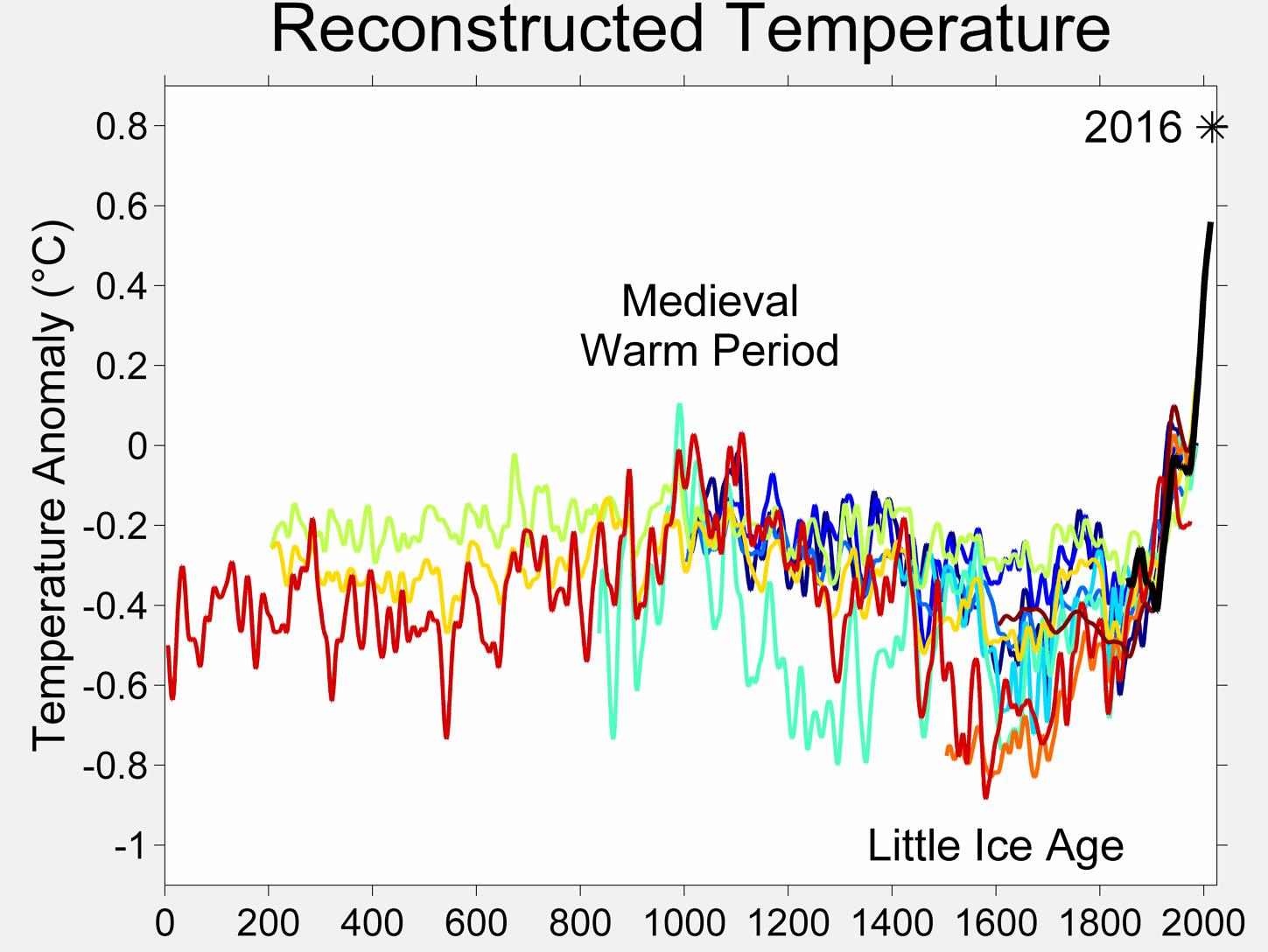
No one would question that climate impacts our lives in both trivial and devastating ways. But did you know that many of the dramatic themes in historywere caused by an event called the Medieval Warm Period (MWP)?


Much like most scientific or historical theories there is some controversy, climate may be the answer to a number of question about movements and events between the ninth and thirteenth centuries. Why did the Danes and Norse suddenly abandon their societies and lands to raid throughout the British Isles and into Normandy? Why did they settle in Greenland and Labrador in North America but leave these settlements never to return? Why did the Black Death happen when it did?

Many scientists and historians believe that two periods of climatic change explain all. The MWP brought warmer weather and as a result better and longer growing periods for agriculture. As food became less scarce, more children survived to adulthood. In places like Scandinavia more children meant more sons to inherit land. When land became scarcer than food, the landless had to go looking for new places to settle. Thus the Danes raided and then settled parts of the northern and eastern coasts of Britain, and the Norse made their way to Iceland and west to Greenland and Labrador.

One indication of the more favorable climate is the fact that during the MWP wine grapes were grown as far north as southern England!

When the sea was relatively free of icebergs, the Norse who settled the eastern shores of Greenland were able to send ships back and forth from Greenland to Norway and Iceland. While children are still taught that "Columbus discovered America" the fact is that the Norse settlements in what would become the Maritime Provinces of Canada were established and shipssailed back and forth between Labroador and Greenland.

So why did the Norse not make a permanent mark on North America? And why did Greenlanders completely abndon the hometeads they built and maintained in the ingospitable land? The weather grew colder and the iceberhs returned, making the trips between the new world and Norway and Iceland too perilous to continue. They could not subsist without trade with the lands of their heritage, nor did they wish to disconnect from their homelands. So they up and left.

After the centuries of a better life in the North Atlantic, the temperatures suddenly dipped. What had been plenty became over-population and scarcity. The famines of the early fourteenth century made the coming of the Black Death devastating. Whole billages were left unpopulated. Then the lack of cheap labor meant that social conditions for the poorer folks had to improve. What is often called The Little Ice Age brought a change in the social fabric of Europe.
But that's a tale for another blog entry.


Thursday, June 14, 2012

[Topic] Why You Should Buy Books In this Economy


Originally post 10/7/08.

A friend of mine had comforting words when I expressed my concern about having come out with my first novel just as the world economy is taking a nose dive. She said, "A book is solace in times of need."

She's right. If the electricity is off, you can't watch TV but you can still ruin your eyes by reading by candlelight.

Plus, there are lots of practical uses for books in times of scarcity. Here are just a few.
  • Home defense.. best with a really fat book like my novel.
  • Insulation... four to five inches of densely packed paper, that is, a book, floor to ceiling on every wall beats the best commercial insulation around.
  • Books as fuel... to start fires or just to feed them. You could cook a whole meal on my novel.
  • Hunting...a book makes a great missile.
  • Padding clothes... again, paper makes great isulation.
  • Trade... with people who didn't think of how bored they would get with nothing to do.
  • Weights... for holding down the edges of the tarp you now live under.
  • Food extender... adds no calories but lots of bulk, add to ground meat, bread, mashed potatoes.
  • Home repairs... use books as shingles.
  • Bedding... crumple pages and put inside dubet cover.
  • Entertainment... your kids will love all the unbelievable stories and pictures of what life was like before the Crash.
  • Defense... buiild fortress out of piled books.. not recommended against flamethrowers.
  • Pest control... wait until the cockroach wanders onto and open book.. then shut it fast.
  • Furniture... it just takes a third of an encyclopedia to make a stool!
  • ... and the unpleasant but obvious, toilet paper.

Monday, May 28, 2012

[TOPIC] Historical "Truth"


Historical "Truth"

One warning: early newspapers were not exactly unbiased in their reporting. This is true of other primary sources as well. Memoirs and letters are particularly suspect. Writers have always slanted the accounts they've left behind to make themselves look better and to reflect their own opinions-or those of the people paying them to record events for posterity. Sir Thomas More's History of King Richard III (1513) is a case in point. More might have lost his head much sooner if he hadn't written what Henry VIII wanted to read about his predecessors.

It is unwise to leap to any firm conclusions based on records left by our ancestors. Let's say you've found a book that reprints a series of laws dealing with criminal offenses, passed in the time and place you're writing about. They were in effect, but did everyone obey them? Were they enforced? Did people living at the time, concerned with their own survival, away from the city or the court, even know they existed, let alone what they said? English law in the sixteenth century specified hanging as the punishment for a variety of crimes, including the theft of anything valued at a shilling or more. In case after case, this sentence was not carried out. Felons were branded instead, or acquitted in spite of overwhelming evidence of guilt. Then, as now, nothing is cut and dried. Historical "truths" can be interpreted in a variety of ways. You will need to use common sense to apply the realities of everyday life in a bygone age to the "facts" of history.

From Kathy Lynn Emerson. How to Write Killer Historical Mysteries: The Art and Adventure of Sleuthing Through the Past (pp. 44-45). Kindle Edition.

Wednesday, May 23, 2012

[TOPIC] Thinking About Sex

There is no recession when it comes to sex in historical novels. Even if you don't admit to any interest in bursting bodice romance novels, you will still find an ample supply of more or less graphic sex scenes in even medieval era novels.

Some readers and authors squirm at this fact. They say things like "The Church frowned on such behavior!" or "Women then would never have behaved like that" and cite tales of couples using a sheet with a hole in it so a man could impregnate his wife without actually seeing her naughty bits.

I frankly reject these notions of premature Puritanism in the Middle Ages. People are people, and sex is sex. If we had homes for unwed teen mothers in the 1950s in spite of much greater strictures against premarital sex than we have today, then why believe young people in the 1250s were any different?

It is important to remember that much of what we know about the Middle Ages was written by monks. That is not a credible source for interpretations of female behavior in general, no less sexuality. Further, if the Church's strictures about sexuality were so formidable, why did they not take within their own society? In a time when the Church was a career path as much as or more than a spiritual calling, numerous instances of clerical mating abound.

I say don't assume anything about the era that does not jibe with human nature. Healthy people had sex, lots of it, and enjoyed it very much, and I for one intend to lace my historical novels with healthy people.

Originally published a whole bunch of time ago.  September 3, 2008 to be precise.

Thursday, May 10, 2012

The Royal Wedding

In grateful acknowledgement of president obama's support of marriage equality, we present a historical wedding.


"How did you talk that priest into doing this, Nedikins?"

King Edward, the second of that name, grinned impishly. "He's not a real priest, my Pierrot."

Piers Gaveston sighed. "And they call _me_ the Lord of Misrule."

He let Edward take his elbow and guide him down the chapel's central aisle to the altar. There the two of them knelt before the ersatz priest.

"But your Majesty, I don't know the marriage ritual..." the confused looking impost er whined.

Edward frowned. "Never mind. Just say , 'I now pronounce you man and wife.   You may kiss the bride.'"

"Nedikins!" Piers protested. "Which of us are you calling the bride?"

Edward frowned again. "Oh don't be tiresome. What difference does it make?"

"I suppose since we are a cou0ple of queens, we can both be the bride." Piers smirked. "I shouldn't think Isabella will be too pleased."

Sulking, Edward pleaded, "I asked you not to mention her. Why can't you do as I ask?"

The "priest" cut in, "You may kiss the bride."

Piers Gaveston reached out and touch Edward's cheek with his fingers. "I do love you, Nedikins." He leaned in and put his lips on Edward's.

The king melted. He kissed back, sweetly and romantically.

"My Pierrot," he sighed.

Piers smiled. "Now what was that about my doing something you ask?" He glanced down at the king's codpiece suggestively.

"Oh, my Parrot..."

"My Nedikins. I couldn't help but lose my head over you."

They let the next kiss linger as the fake priest took the coins Edward held out to him and left the chapel.

Vive l'amour!

[Originally published in gay flash fiction, http://groups.yahoo.com/group/gayflashfic/]

Monday, April 16, 2012

Anne Shirley Ain't Got Nothin' on Me


Anne Shirley's impassioned pleas to be called Cordelia and her devotion to her "bosom friend" came back to me this past week as I reread the early letters my friend Laura and I wrote on behalf of our characters who were fated to become the main characters of my novel, An Involuntary King. I have been posting the few that still exist from the period of 1964 to 1967 on my new blog of the same name. True, I was 12 and Laura was 11 when we started this project together, but hoo doggy, we almost put Anne to shame! If the novels about Anne were almost impossible for me to read, these letters... well, see for yourself.


I find myself hoping no child psychologist ever comes across them... I would rather not know what they reveal. And the stories to come are no better.

It seems like my pre-adolescent mania was for tragic near death scenes, a king prone to comatose periods, rash acts like murdering the man who bedded one's wife by poisoning him at the feasting table, florid outpourings of love and regret. I have only one of the letters Laura wrote but in it she presents only a slightly less manic self-revelation. References in our letters to ones that are missing show her having the queen so crushed by the death of her infant conceived in rape that she takes a gallant young knight as a lover.. he whom the king would later poison and then exile himself for a year as punishment. he drawing above is from the same time as the stories and shows poor old Lawrence bed ridden as usual, facing and giving command of his armies to Elerde, the man who had put him in that bed of pain by bashing him in the head in a duel. It's complicated... there is a woman involved of course.

And I am not even going to mention the sorceress who enchanted the king and is found with him, dead.

More recently Laura and I reconnected. We have had occasion to talk about these letters and stories. She revealed to me that she was always longing for the sort of love found in the sort of songs sung by the trouveres. My situation was a little more complicated, or so I believe, as I had a preference for being the protective, strong hero rather than the dreamy heroine. Then why was Lawrence always injured or sick?? Don't ask me. I can't know.

Let me conclude by assuring you that I am a much more stable, mature and able writer now... no, really.