You hear the horror stories of being forced into a pink nightie in the hospital, of being treated as a little nuts by nurses and the rest, but this is not the experience I had recently when a stroke landed me in intensive care and rehab at Evergreen Hospital in Kirkland, Washington. This is in spite of the fact that when I was first admitted for a stroke on April 15 I insisted my name was Nan Louise Hawthorne and only started identifying as myself a couple weeks later.
Part of the reason I got the respect I was due was the stalwart insistence that "Kit identifies as male" by my longtime spouse Jim. That alone speaks volumes of his regard for me since this might have been his golden opportunity to "get me back". His love and loyalty is beyond praise.
I don't know when I remembered I was Kit. Perhaps it was when I had been transferred to the rehab unit, but I began to notice how the nurses and staff carefully referred to me as "he". Short term memory loss is a hallmark of stroke. From one day to the next I don't recall.
I have had to go off testosterone as it may have been a contributing factor to my having a stroke at 62. But I know who I am and am thoroughly back to myself as male. I still wish I could have top surgery but am now aware that my health is touch and go. Men's clothes and short hair and my tiny dusting of beard will have to do... and my insistence that I am a man.
As it is I am proud to have pulled off this post. I have been unable to write anything more than emails. My speech therapist will be thrilled.
Anyway knowing that I can expect the respect I get as transgender from my doctors and from the hospital means all the world to me. Hurray for the Seattle area.
Thursday, May 29, 2014

Wednesday, March 12, 2014
Imposing Acceptabillity on a Historical Transman

I have written about the subject of this nook, Albert D. J. Cashier, for various sites dedicated to transgender figures in history. Albert was born Jenny Hodgers in Northern Ireland and emigrated to America in about the mid-1800s. He lived as a man for over 60 years and served with the Illinois 95th as an infantryman during the American Civil War, fighting in the siege of Vicksburg under Gen. U. S. Grant. His biological gender was only found out when after he broke his hip in an accident the doctor and nurse examining him removed his clothing.
When I bought this book I was under the impression it was an autobiography. That was what I had gleaned from sources and passed on in my own articles. I was disappointed while reading it to discover that it is at best a fictional "autobiography", a novel really penned by Lynda Durant. Before I go on to explain how much this disappointed me, I will say that the book is very well written, engaging, and offers what appears to be a terrific eyewitness account of the lives and battles of Civil War foot soldiers. As fiction, the author tries hard to create a more complete story than real life can provide, giving Jenny a credible story and a love interest. I appreciated the battle scenes enough to recommend the book to my friend and battle consultant Jack.
But... but.. it is fiction. How much I can't tell by the afterword. The love interest is a fictional character based on a real person, a man who wrote detailed accounts of his comrades in the battles pictured in the novel.
The problem is that it is part of the fate of so many GLBT people in history to have their lives reinterpreted by historians as much as historical novelists to "clean them up", make them not GLBT and even inventing sweethearts to prove the person did not in fact lean toward same sex relationships or an alternate gender identity. Perhaps the authors don't approve of who these individuals may actually h ave been, or they want to identify with them, or maybe they just want to sell books and feel they must gloss over the less seemly issues. I just hate that. The whole reason I have been writing GLBT historical fiction is to repair just this erasure of people's lives from the record, if b no other means than, as Mnique Wittig wrote, "invent" plausible interpretations. It reminds me of all the stories I read as a teen of women who fought as knights, hoping against hope to find a heroine I, as someone who believed she was female, could regard as a role model, someone I could relate to. It never happened. All I found were stories of women who lived as knights until the right man came along to show them being loved by a real knight was better than being one. Now that I am living as the transgender man I am, finding this reinterpretation of Albert Cashier was an even worse disappointment.
Before I realized the book is a novel and not a true biography I started to question whether "transgender" was the right term for Cashier's gender identity. I have been leaning to a definition of someone who at least chose to be believed to be identified as the opposite gender from their bodies. How can we really know except in rare cases what the individual him or herself intended? It seems clear that the Chevalier d'Eon by her own insistence saw herself as female, and Billy Tipton went so far as to marry a woman long before same sex marriage was legal anywhere. But did surgeon James Barry who passed as a man to gain entrance to medical school and continued to identify himself to others as male until his death actually believe himself to be male, somehow accepting as valid what we now know is truye for transgender people, the gender of one's brain being the factor rather than the genitals? In Cashier's case I was about ready to throw in the towel and admit he was not, in fact, a transman but a woman masquerading as a man.
Now I am not so certain. I now know that the conditions that influenced me were Durant's invention.
Just as Durrant may have wanted to write about someone with whom she could identify, I want to identify with him as well. I want to write about him as a transman. Which is more valid? Probably neither and both.
I will however quibble with the details imposed on Cashier's story, in particular the love interest and also the guilt Cashier feels for pretending to be a man, lying to everyone, regretting how lying separated him from others. Then in the Afterword the author philosophizes about how isolated Cashier must have felt, lonely hiding her true nature from others. Well, yeah, especially if he was a transman and his "autobiographer" chose to cram him into the trappings of a heterosexual female, never even considering , for so it seems, that Cashier may have been transgender. Shades of all the gay men in history who have had their stories retold so they could fit into "acceptable norms".
I also regret that Durant's novel is lost to transgender youth and adults as a story of someone who lived true to his inner nature bravely and without hiding from the life he wanted to live. Like biographers who insist that Pres. James Buchanan was either thwarted in his love for a woman or was actual asexual in spite of fifteen years living with another man wand together called "Mr.and Mrs. Buchanan as well as "Aunt Nancy and Uncle Fancy"", I find myself angry that GLBT people's lives can only fall into two categories, utterly overlooked or in fact fraudulently reinterpreted. It just makes me sad, as I felt in a novel where a character who committed suicide because she could not live the life she preferred as a transwoman is completely reinvented by the male name on her headstone. It is, as Shakespeare wrote, "the unkindest cut".
When you consider all the historical figures who have been "cleaned up" to make them safely heterosexual and cisgendered, I call this just plain mean-spirited. Do historians and novelists insist all great women were really men and all great members of other races really white?
Friday, March 7, 2014
An FTM Novel by an FTM

So many transgender novels I have read are light, humorous, safe, but not this one. The dark mood of this novel as an authenticity not often found in the genre, baring the self-absorbed and sarcastically pitiable world view of late adolescents. It follows transgender student Dean as he enters college and starts to find his fellow transmen. Obsessed with the British indie rock band The Smiths Dean is drawn to his new roommate, himself a musician bound for success in the indie rock industry, also a transman but one with a girl friend. Just like Real Life, the thrust of college life for Dean is the social environment rather than the classes, as a young person learns to cope in the world no longer dependent, albeit resentfully, on the family of origin, no longer able to rely on that excuse. Dean manages to make his way through it, more or less successfully, finding his place in his insular community of transmen and his voice as a writer.
I'll be honest, I did not much care for Dean throughout much of this novel, but I know full well that liking a main character is not the point of reading a novel. I found him self-absorbed, adolescent, unstable, but then that's who he is.
Consider the lack of models for transgender people. Just who should Dean turn to for someone to show him how to be in the world? So often the only community we have is our peers, just as directionless and lost as we. How can I expect Dean to be wiser, more philosophical or more mature than those young people who have precedent to guide them?
His relationship with Teddy, a transwoman is the most moving part of the novel and showcases DeLine's exquisite prose as no other.
He placed the angel on the footer beside the silk plant. He realized it would seem a typical talisman to passersby, just as Theodore Patrick Foley would seem a typical man. The gesture felt powerful nonetheless. He curled up over the grave, hugging his knees. He put his lips to the dirt between the grass and closed his eyes. After a few moments, he whispered into the ground, a variation of something he’d accidentally memorized by heart “And alien tears will fill for her Pity’s long broken urn. For her mourners will be outcast men And outcasts always mourn.”
I am reminded that even people with whom I could never get along have some gift for me if I pay attention. In this case it is grace.
Wednesday, February 26, 2014
A Simple Way to Understand "Transgender"
"It's all in your head," your mom or dad or friend or clergyman says about your being transgender. And they are right.
Consider the experience of pain. You might say, "My foot hurts." Can you prove it? There may be verifiable physical evidence, a cut, a bruise, a damaged muscle, but not all pain has an obvious physical cause. Yet you know your foot hurts. Someone might tell you "It's all in your head", meaning "You are imagining the pain." You are unlikely to grant this possibility.
It is the same with one's subjective experience of gender. I know I am a man, but anyone inspecting my physiology would conclude otherwise. The same people who would accept my assertion that my foot hurts will reject my assertion that I am and always have been male. Why? Probably at least in part because others can't see how the wrapper, the body, can be anything other than what it looks like. However, there is a simple explanation.
Let's go back to the topic of pain. When you feel pain you can identify its location, but it is because the painful nerves communicate their distress to your brain. The pain is experienced in the brain but identified as to its location. The brain tracks ever thing, and that includes one's sense of oneself.
There's a good reason why someone's brain might identify the person as one gender rather than another. Hormones play an essential role in whether an embryo develops into a boy body or a girl body, but that's not the end of the story. There are later hormone flows that affect other stages in develp,ent. More and mre researchers are identifying the flood of gender hormones at the point the brain begins to grow as a possible source for why someone is transgender. If, for instance, in my case, the flow of female hormones caused me to be biologically female, it was the flow of male hormones at the point of my brain's growth that made my brain male and to have male structures and characteristics. You can read more about this at GID Info:
http://www.hemingways.org/GIDinfo/research.htm .
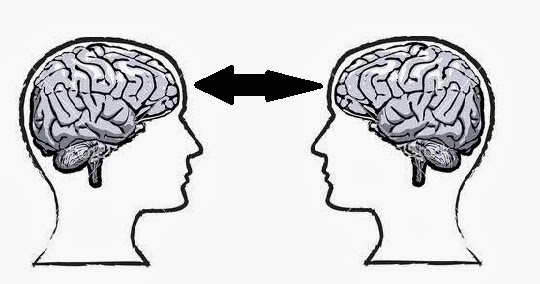
How can you get your head around the a person having a female body and a male brain or vice versa? Try this. You've seen movies or TV shows where a mad scientist or pioneering surgeon exchanges two people's brains. There is an episode of GILLIGAN'S ISLAND with that very theme. Ginger's mind is transmitted into the brawny henchman's head and Mary Ann has the Professor's in hers, etc. .
Let me ask you, which of the two was Mary Ann and which the Professor? It may have looked like Mary Ann but it talked, acted and thought like the Professor. If you and another person swapped brains, you, your personality, memories, thoughts, would go where your brain went. It would not matter what other people who saw you and your former body asserted. They would only see what you formerly saw in the mirror. They would not see what you perceive as YOU. This makes the whle accusation "It's all in your mind" rather meaningless.
Now imagine that instead of undergoing an operation or mad scientist mind transference you had been born with that other body. That's what it is to be transgender. Your mind is in the wrong body. What if Ginger had been forced to remain in the brawny henchman's body. Do you think that may have caused her a great deal of stress? Could she survive that trauma? Could she be expected to, as a former friend said to me abuot top surgery, keep what she was born with, the large rather uncouth male body of the henchmqan? Of course not. And that's why given that my brain is Christopher I need to change my body, to make Nan's female body match Christoper's brain. Ginger had to count on the mind transference gizmo, as she had no way to alter her body back to it's radically different shape. I don't have any diabolical mad scientist machine to put my mind in a more compatible body, but unlike Ginger, I can modift the one I have.
One more point -- plenty of people will deny that the brain is where our identity resides. In fact, in earlier times and other cultures the seat of the self was and is identified as variously the heart, the Third Eye, and othjer body parts no doubt. Our language shows that the brai, or more specifically the mind is situated in our heads. You have no doubt heard some say "That guy is out of his mind!" I sincerely doubt you have ever heard someone described as being out of his elbow.
When you have to explain what it means to be transgender to someone perhaps you might want to hold off on the more clinical or academic explanations and simply allude to the hormone flood determining the gender of the brain and then sit them down to watch GILLIGAN'S ISLAND.
 You can contact Christopher Hawthorne Moss at https://www.facebook.com/kitmoss2012 .
Consider the experience of pain. You might say, "My foot hurts." Can you prove it? There may be verifiable physical evidence, a cut, a bruise, a damaged muscle, but not all pain has an obvious physical cause. Yet you know your foot hurts. Someone might tell you "It's all in your head", meaning "You are imagining the pain." You are unlikely to grant this possibility.
It is the same with one's subjective experience of gender. I know I am a man, but anyone inspecting my physiology would conclude otherwise. The same people who would accept my assertion that my foot hurts will reject my assertion that I am and always have been male. Why? Probably at least in part because others can't see how the wrapper, the body, can be anything other than what it looks like. However, there is a simple explanation.
Let's go back to the topic of pain. When you feel pain you can identify its location, but it is because the painful nerves communicate their distress to your brain. The pain is experienced in the brain but identified as to its location. The brain tracks ever thing, and that includes one's sense of oneself.
There's a good reason why someone's brain might identify the person as one gender rather than another. Hormones play an essential role in whether an embryo develops into a boy body or a girl body, but that's not the end of the story. There are later hormone flows that affect other stages in develp,ent. More and mre researchers are identifying the flood of gender hormones at the point the brain begins to grow as a possible source for why someone is transgender. If, for instance, in my case, the flow of female hormones caused me to be biologically female, it was the flow of male hormones at the point of my brain's growth that made my brain male and to have male structures and characteristics. You can read more about this at GID Info:
http://www.hemingways.org/GIDinfo/research.htm .
 |
| Episode The Friendly Physician |
Now imagine that instead of undergoing an operation or mad scientist mind transference you had been born with that other body. That's what it is to be transgender. Your mind is in the wrong body. What if Ginger had been forced to remain in the brawny henchman's body. Do you think that may have caused her a great deal of stress? Could she survive that trauma? Could she be expected to, as a former friend said to me abuot top surgery, keep what she was born with, the large rather uncouth male body of the henchmqan? Of course not. And that's why given that my brain is Christopher I need to change my body, to make Nan's female body match Christoper's brain. Ginger had to count on the mind transference gizmo, as she had no way to alter her body back to it's radically different shape. I don't have any diabolical mad scientist machine to put my mind in a more compatible body, but unlike Ginger, I can modift the one I have.
One more point -- plenty of people will deny that the brain is where our identity resides. In fact, in earlier times and other cultures the seat of the self was and is identified as variously the heart, the Third Eye, and othjer body parts no doubt. Our language shows that the brai, or more specifically the mind is situated in our heads. You have no doubt heard some say "That guy is out of his mind!" I sincerely doubt you have ever heard someone described as being out of his elbow.
When you have to explain what it means to be transgender to someone perhaps you might want to hold off on the more clinical or academic explanations and simply allude to the hormone flood determining the gender of the brain and then sit them down to watch GILLIGAN'S ISLAND.
Tuesday, February 11, 2014
The Year It All Changed
 2012.
2012. I was already a mess when it started. My gender dysphoria was well underway. I just didn't know that was what was making me so miserable. How did it manifest? I was reading all this gay male historical fiction. Tons of it. Being historical, the books took place mostly in times when being lovers could get a couple men seriously killed. Love stories are often full of angst anyway... this was desperate angst. I was starting to get shaky, stopped being able to read these unhappy tales.
The day after Christmas my lesbian sister came for a visit. It was not much fun. She was impatient and judgmental, plus she sat and checked her text messages frequently. But in the conversations she and I had between her glances at her phone we touched on a topic I had just been developing some new thoughts that surprised me. I was becoming impatient with women. My sister's experience with the woman she was pursuing speaked the conversation. She was frustrated with the woman's changeable attitudes towards a relatioonship. While heretofore I would not have even entertained the thought that there might be a tendency for female culture to exhibit unpleasant common characteristics, I found myself complaining that so many women were so unable to know their own minds. I was astonished. We had a very unpleasant parting, not something I ultimately regret, but it set me on uneven emotional ground about the same time I turned 60.
Or more uneven, since things were already askew in a relationship I'd struggled with for about a year, that being with members of the online group Speak Its Name (SiN) and in particular it's founder who calls herself Erastes. My therapist has an explanation now of why this woman and I never could get along. Of course this is based mostly on m y account, but I did share some emails from Erastes with her, so she may be right. She sees SiN as a little fiefdom and Erastes as a very jealous dictator. She said the problem I have coming into groups with that sort of structure is that I have tons of energy and am generous with it and I threaten the hell out of people like Erastes. What I had assumed was Cross-Pond communications problems was less me and more Erastes and her cronies, namely Lee Rowan.
To be fair, I found Erastes rules for posting on her group and site rather inflexible, and heaven knows I not only know better but am in no way tolerant of such heavy-handedness.
From November through December of 2011 I had taken on reading and reviewing books for the SiN web site/blog. Erastes seemed to like two things about my work.. the honesty and the volume. It happens that I also admire her willingness to say when a book is actually bad. I was turning out the reviews quickly and quality reviews they were, nine of them in six weeks. But apparently I communicated too much or wrongly, since she fired me for being too much of a hassle to deal with.
Now for the explanation of the movie poster. I sat down one evening in January 2012 to watch the movie "Maurice". Bear the end of the movie the character Clive is shown looking wistfully out his wife's and his bedroom window, imagining Maurice smiling and waving at him. The look on Clive's face, the terribly wistfulness and pain, really hit me hard. After the movie I went upstairs and found that Erastes had canned me as a reviewer. I was stunned. I began to cry, not something I do often, and cried off and on for a few days. After those days I became anxious, depressed, had panic attacks, was nearly homebou7nd with agoraphobia-like symptoms.
I did not even begin to come out of this misery until July.
 |
| Gender Odyssey logo |
About a month after the blowup with Erastes and SiN, I happe3ned to go to my neighbors' to drop off a birthday present for their second eldest son. The wife, Danna, asked me if I was feeling any urges to go to church, since she had her prayer group praying for me. I told her her church's attitude towards gay rights would make that impossible3. That is when her husband, Leonard, lit into me with a string of aggressively delivered idiotic questions and objections to gay rights, everything from his conviction that gay people are sick more than straight, asking me if there were gay sharks (and not listening to my answer), and "What's next? What if I want to marry my cat?" (and not listening to my answer, "No, because a cat can't consent.")
Following this my friends Suzanne told me she was opposed to gay marriage as well.
With these two encounters I got even worse. I would have panic attacks when away from home. (I still can't hear slow, sad songs in supermarkets.) I decided I needed safe space and started going to the Everett/Snohomish PFLAG. That is when two things started to happen, healing and acquisition of the key to my unhappiness. I owe this group of people a great deal for the grip on sanity I now can reach for. Their affirmation and support mattered, but as it turns out, so did being introduced to the concepts, not exactly new to me but unexamined, of people who are transgender.
At the Gay Pride parade in June, I told my PFLAG friend Maggie that I felt more like a gay man than a gay woman. POW! That was it. Not only have I never been a lesbian, though that seemed the only explanation for my feelings in my early twenties, but I am also not a straight woman. I am a gay man! That explains so much, as I will explain in a future post. At the next PFLAG meeting I came out as Kit. Within a week I had told my SO. Within a couple more weeks I had the exceedingly well-timed opportunity to attend the Gender Odyssey conference. At that conference I found my "kind". I never felt so at home in my entire life. An d I was learning the key to so much of my own experience.
Interestingly Erastes reared her head to chime in on this new awareness of my identity. She tweeted that if Kit Moss was a pen name, which indeed it started out as, I should not pretend to be a man, that it would not serve me well as an author of M/M romance. I had realized by then that I am a man, and I said so. I don't know and don't care what she thought of that.
How my SO and others and I myself adjust to this new understanding, the awareness of my identity as a gay man, is for other later posts. But all this, from the anxiety reading the historical novels and up until and including now is what my therapist tells me is called gender dysphoria, the point at which the incongruity of one's biological sex and mental and emotional gender reach a breaking point.
The scene with Clive? Recently I was thinking about this and realized that what I was seeing on Clive's face was what I myself was feeling. His wistfulness and regret, that of a man who has made his bed and now must lie in it, with a bed mate not his right one, was my own grief over 60 years as the real me lost. As it happens, I am much luckier than Clive. At least my bedfellow is the sex and gender where my affectional preference lies.
Thus Kit saw the light of day for the first time, Nan started to fade back into memory, and the amalgam that is Me began to coalesce. hail Atlantis!
I was already a mess when it started. My gender dysphoria was well underway. I just didn't know that was what was making me so miserable. How did it manifest? I was reading all this gay male historical fiction. Tons of it. Being historical, the books took place mostly in times when being lovers could get a couple men seriously killed. Love stories are often full of angst anyway... this was desperate angst. I was starting to get shaky, stopped being able to read these unhappy tales.
The day after Christmas my lesbian sister came for a visit. It was not much fun. She was impatient and judgmental, plus she sat and checked her text messages frequently. But in the conversations she and I had between her glances at her phone we touched on a topic I had just been developing some new thoughts that surprised me. I was becoming impatient with women. My sister's experience with the woman she was pursuing speaked the conversation. She was frustrated with the woman's changeable attitudes towards a relatioonship. While heretofore I would not have even entertained the thought that there might be a tendency for female culture to exhibit unpleasant common characteristics, I found myself complaining that so many women were so unable to know their own minds. I was astonished. We had a very unpleasant parting, not something I ultimately regret, but it set me on uneven emotional ground about the same time I turned 60.
Or more uneven, since things were already askew in a relationship I'd struggled with for about a year, that being with members of the online group Speak Its Name (SiN) and in particular it's founder who calls herself Erastes. My therapist has an explanation now of why this woman and I never could get along. Of course this is based mostly on m y account, but I did share some emails from Erastes with her, so she may be right. She sees SiN as a little fiefdom and Erastes as a very jealous dictator. She said the problem I have coming into groups with that sort of structure is that I have tons of energy and am generous with it and I threaten the hell out of people like Erastes. What I had assumed was Cross-Pond communications problems was less me and more Erastes and her cronies, namely Lee Rowan.
To be fair, I found Erastes rules for posting on her group and site rather inflexible, and heaven knows I not only know better but am in no way tolerant of such heavy-handedness.
From November through December of 2011 I had taken on reading and reviewing books for the SiN web site/blog. Erastes seemed to like two things about my work.. the honesty and the volume. It happens that I also admire her willingness to say when a book is actually bad. I was turning out the reviews quickly and quality reviews they were, nine of them in six weeks. But apparently I communicated too much or wrongly, since she fired me for being too much of a hassle to deal with.
Now for the explanation of the movie poster. I sat down one evening in January 2012 to watch the movie "Maurice". Bear the end of the movie the character Clive is shown looking wistfully out his wife's and his bedroom window, imagining Maurice smiling and waving at him. The look on Clive's face, the terribly wistfulness and pain, really hit me hard. After the movie I went upstairs and found that Erastes had canned me as a reviewer. I was stunned. I began to cry, not something I do often, and cried off and on for a few days. After those days I became anxious, depressed, had panic attacks, was nearly homebou7nd with agoraphobia-like symptoms.
I did not even begin to come out of this misery until July.
Continues.Christopher Mosshttps://plus.google.com/1155314692559960418220
Saturday, February 8, 2014
Trans Teen in Charlotte Runs for Homecoming King
Blake Brockington has spent the better part of two years winning over the respect of students, faculty, and administrators at his school. Now, he looks to cap his high school tenure by running for homecoming king.

A 17-year-old high school student in Charlotte, N.C., received some great news earlier this week. Blake Brockington, a transgender senior, has been nominated for homecoming king at East Mecklenburg High School.
February 07 2014 1:25 PM ET
Blake Brockington
A 17-year-old high school student in Charlotte, N.C., received some great news earlier this week. Blake Brockington, a transgender senior, has been nominated for homecoming king at East Mecklenburg High School.
Tuesday, February 4, 2014
Review of BEAUTIFUL MUSIC FOR UGLY CHILDREN by Kirstin Cronn-Mills

By Kirstin Cronn-Mills
Reviewed by Christopher Hawthorne Moss
Gabe Williams has found his niche, his love for music, fed by the support and resources of John, a pioneer rock DJ, having led him to create a late night community radio program he calls “Beautiful Music for Ugly Children.” He discovers quickly that he is darn good at broadcasting and that he has a devoted fan club. The only hitch is that his fans, mostly from his own high school, know him as Liz. Will they still like him and his show when they find out he is transgender? Will his family and closest friends accept him with the authentic identity he has embraced? Using recording industry terminology, he calls his female identity his “A side” after the better known song on a 45 RPM. His “B side” is who he really is and wants to present to the world. He quips “Show us your B side!” and starts a movement of self-expression in his town.
As his fandom of “Ugly Children” grows and participates in weekly stunts, he fears being outed as that girl Liz in school. Inevitably a fellow student makes him and spreads the word. Along with support, Gabe starts getting threats that culminate in an act of violence that affects one of his dearest friends. He starts to wonder whether he can be himself in the world he lives in.
Gabe is entirely believable, neither two dimensional nor needlessly complex. His friends and family ring true as well, and, horrifying though the memories are, life in high school with all its social strata and expectations.
First let me tell you that, as a transman myself, pretty much everything Gave experiences was absolutely what I have, in spite of the fact I’m an old man now at 61. Our only real difference beyond age is that Gabe loves women, while I am a gay transman. Oh, and I have never seriously contemplated suicide. Lucky for me, since I didn’t have a best friend like Gabe’s to talk me out of it. But Gabe’s attempts to get recognition from family, schoolmates and friends is familiar to me, as is the mixed bag of clothing choices – yes, men’s clothes are more comfortable, but not so much the chest binder a transman wears. Just how to be yourself after years of conditioning as someone quite other is a big challenge.
Any lover of rock music will love the book. Gabe and his hero John are experts on the subject, and as an old radio fan it was a joy to listen to the recording industry and broadcasting lore. It was all quite familiar and dead on accurate as far as I could verify.
This is easily my favorite novel about a contemporary transman so far. It is just such a professional job of composition and execution and so full of authenticity. It’s also fun to read, though with tense moments.
“Tell us about your B side!”
Subscribe to:
Posts (Atom)